
Introduction
Professional tennis is unusual because most players are not salaried employees. They generally earn competition income through prize money while also funding many of the costs required to compete internationally. This creates an important economic question below the highest level of the sport: can players outside the ATP Top 100 generate enough reliable income to sustain a professional career?
Exact profitability cannot be calculated for every player because travel, coaching, accommodation, medical support and sponsorship income vary substantially. Instead, this article examines public indicators of financial sustainability: growth in ATP Challenger Tour prize money, the number of players earning meaningful amounts at Challenger level, and the ATP’s Baseline financial-security programme.
The Challenger Tour has changed significantly
The Challenger Tour is the main pathway immediately below the ATP Tour and is particularly important for players trying to enter or return to the Top 100. ATP figures show that total Challenger prize money rose from $12.13 million in 2022 to $20.32 million in 2023, $20.98 million in 2024, $27.44 million in 2025 and a planned $32.44 million in 2026. That represents growth of approximately 167% in four years.
The calendar is also expanding. ATP announced that the number of Challenger events would rise from 216 to 265 in 2026, including 50 additional Challenger 50 tournaments. More tournaments can create more earning opportunities, although it does not guarantee that an individual player will earn enough to cover a full season’s expenses.
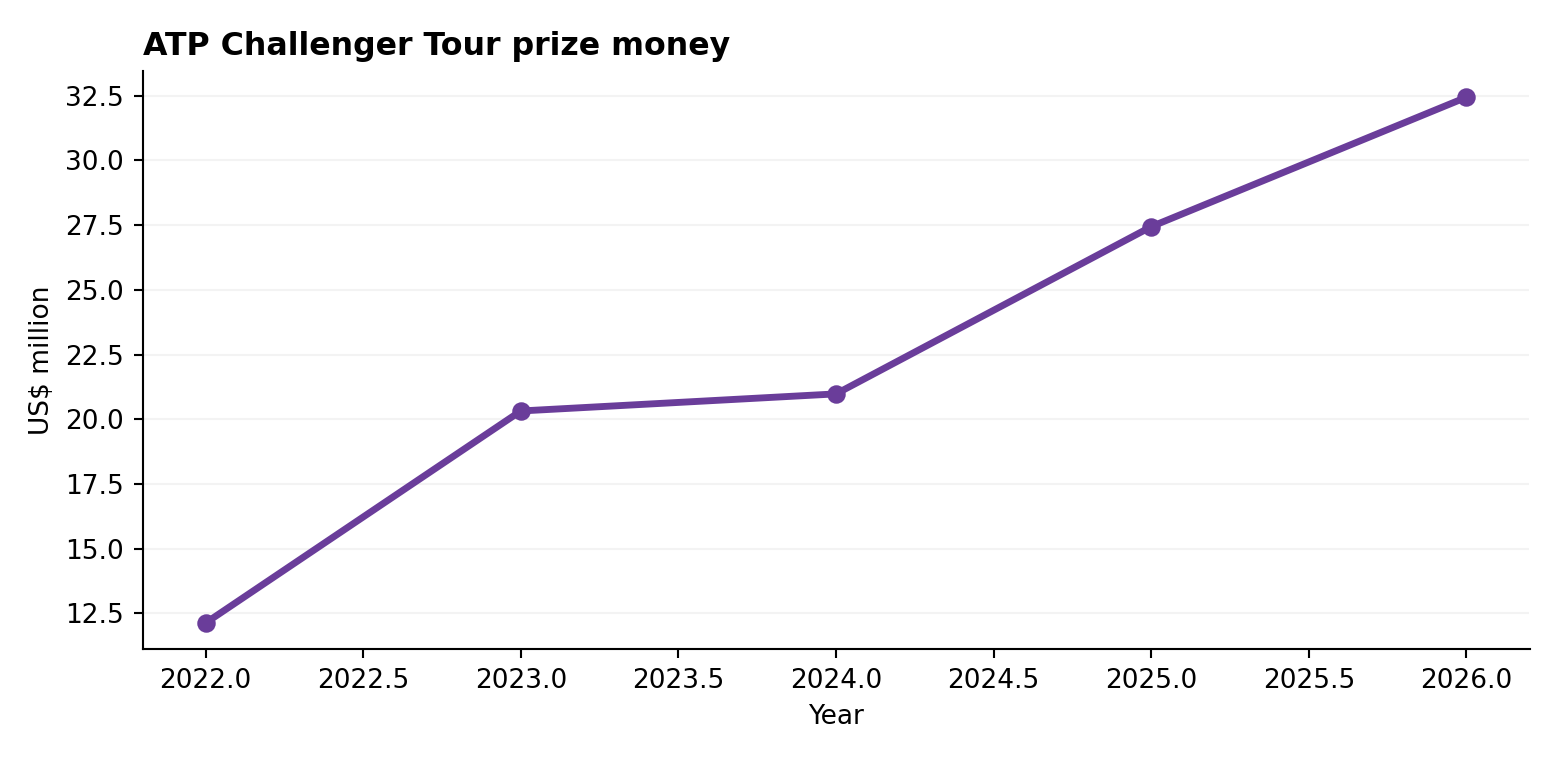
Figure 1. ATP Challenger Tour prize money, 2022–2026. Source: ATP.
Are more players actually earning more?
Aggregate prize money can rise without necessarily benefiting a broad group of players, so distribution matters. ATP data from the first quarter of 2025 provides useful evidence. Challenger events distributed $6.3 million during that period, compared with $4.5 million in the first quarter of 2024 and $2.1 million in the same period in 2022. The 2025 figure was therefore three times the 2022 level.
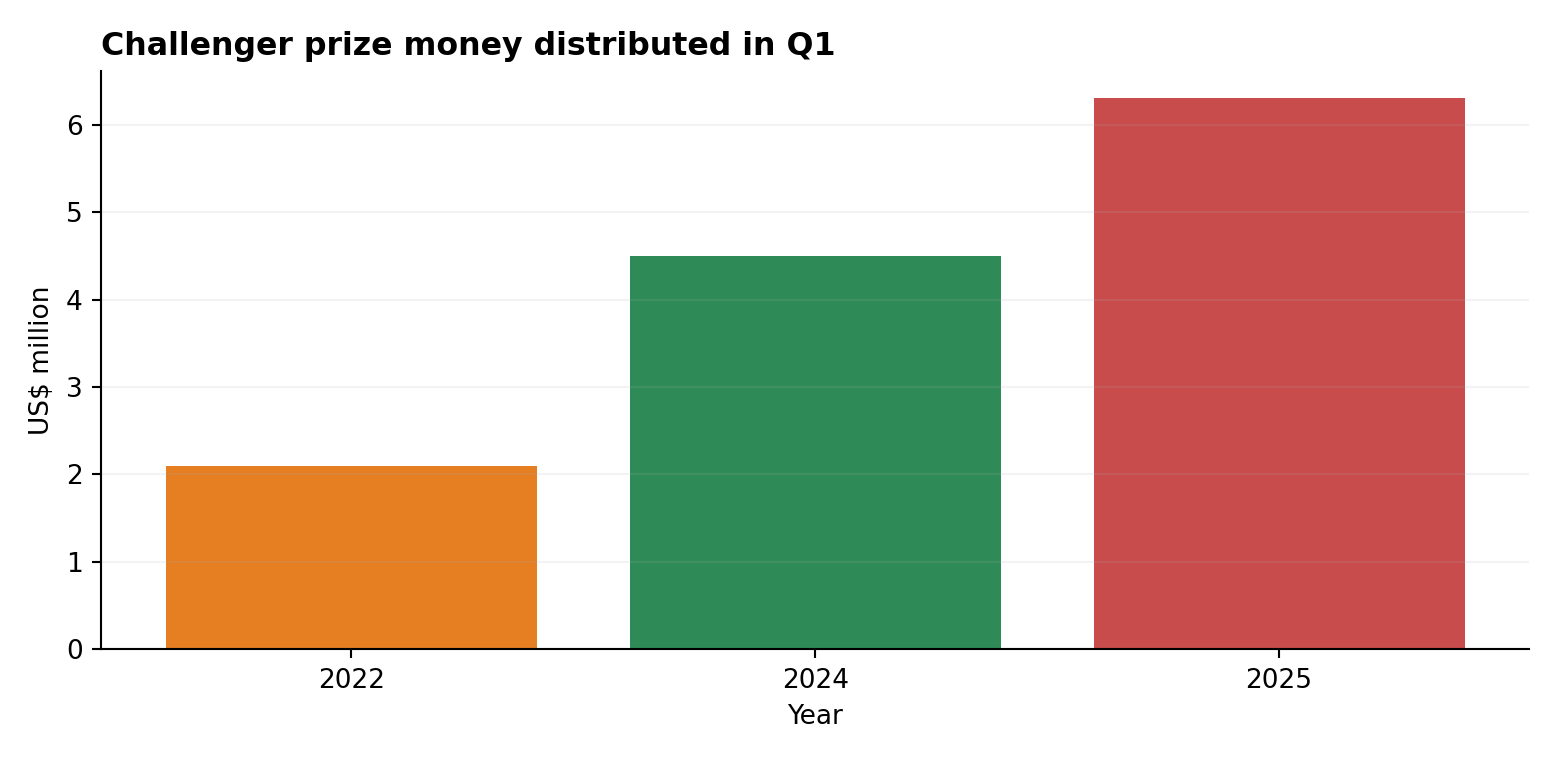
Figure 2. Challenger prize money distributed during the first quarter. Source: ATP.
The number of players earning more than $10,000 from Challenger tournaments during the first quarter also increased sharply: 44 players reached that level in 2022, 147 in 2024 and 203 in 2025. ATP also reported that 37 players earned more than $30,000 in the first quarter of 2025, compared with 12 in 2024 and only two in 2022. These figures indicate that the increase was not confined to a handful of tournament winners.
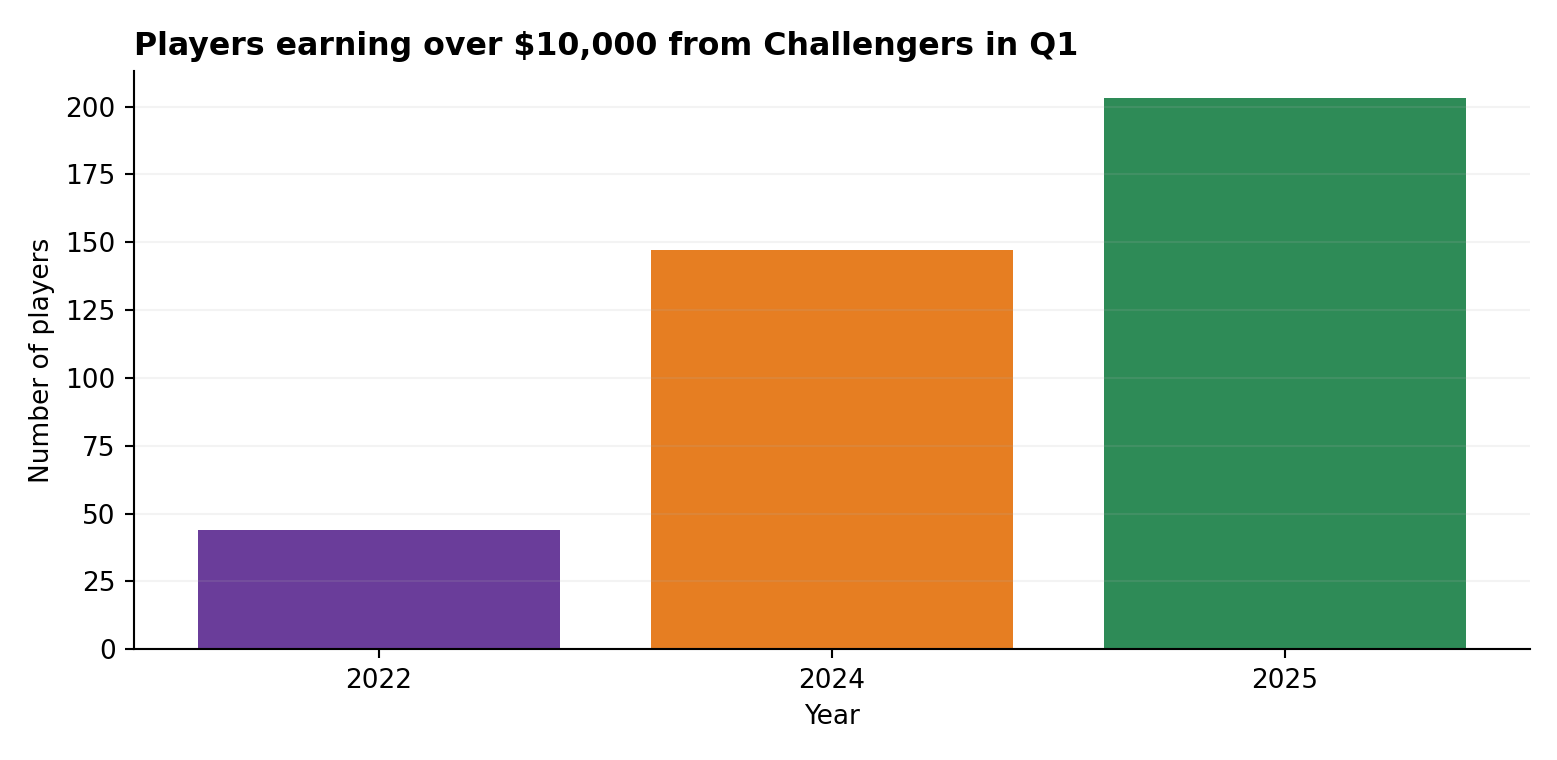
Figure 3. Number of players earning over $10,000 from Challengers in Q1. Source: ATP.
Why financial security remains an issue
The ATP itself has introduced policies designed to reduce income uncertainty. Its Baseline programme began in 2024 with guaranteed base-earnings thresholds of $300,000 for Top 100 players, $150,000 for players ranked 101–175 and $75,000 for those ranked 176–250. If an eligible player’s prize-money earnings finished below the relevant threshold, the programme could cover the shortfall subject to its rules.
The structure is economically significant because the guaranteed level falls substantially outside the Top 100. ATP specifically stated that the programme was intended to help players plan seasons and invest in expenses such as coaches, personal physiotherapists and travel. In 2025, the programme provided more than $2 million of support, according to ATP.
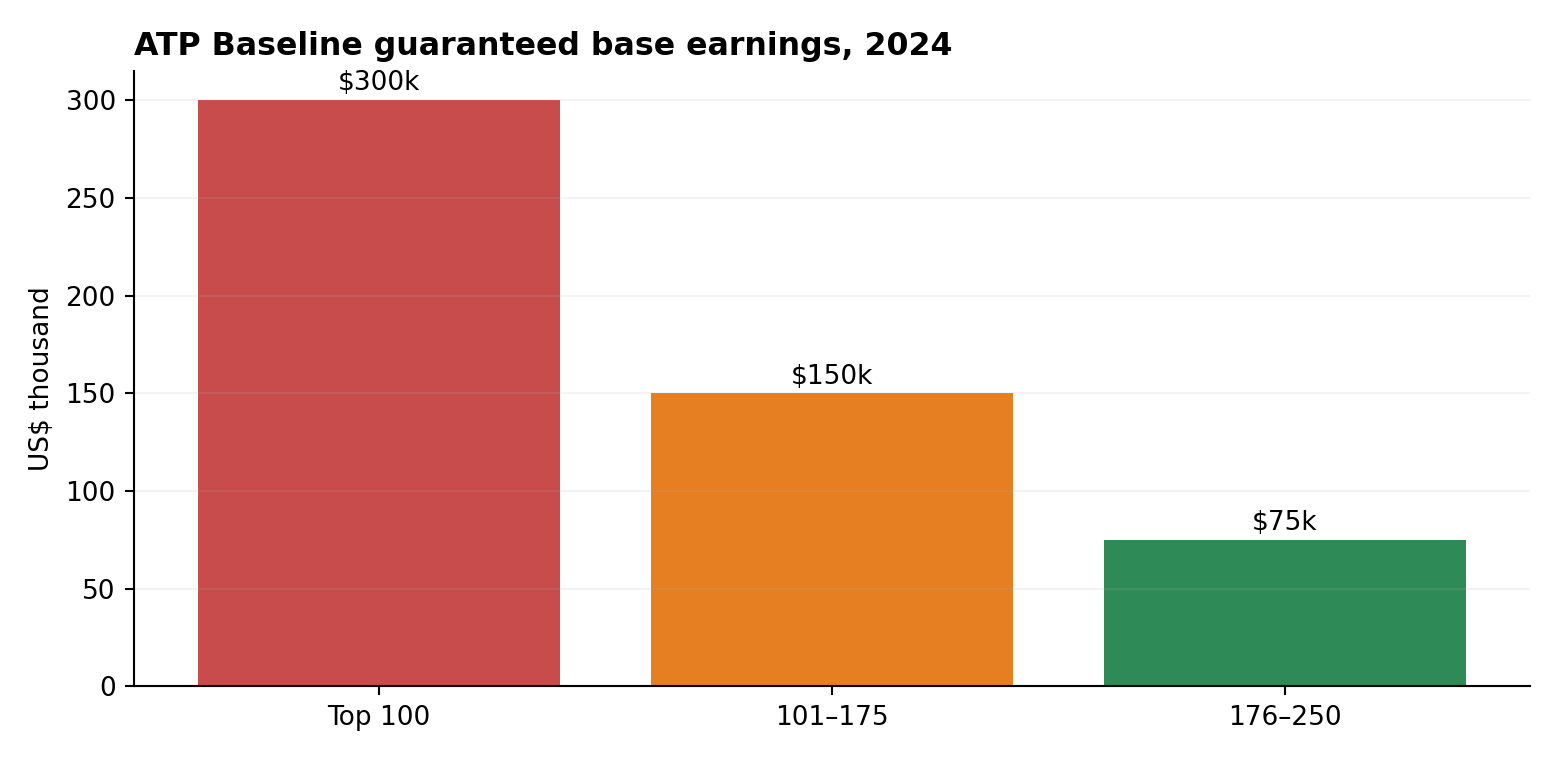
Figure 4. Guaranteed base-earnings thresholds when ATP Baseline launched in 2024. Source: ATP.
Costs make prize money different from profit
A major limitation of using prize money as an income measure is that gross earnings are not the same as disposable income or profit. Professional players may pay for flights, hotels, coaching, fitness support, equipment and other competition expenses. The size of these costs depends on a player’s schedule, location and team, making a single universal break-even figure unreliable.
ATP’s 2026 Next Gen Accelerator illustrates the importance of these expenses. Eligible young players can receive $1,000 for each Challenger event entered, up to $12,000 annually, specifically to contribute to travel and competition-related costs. This support does not reveal the average cost of a season, but it provides evidence that competing expenses are economically relevant even within the professional pathway.
Conclusion
Public data shows a substantial improvement in the financial environment below the ATP Top 100. Challenger Tour prize money is scheduled to reach $32.44 million in 2026, approximately 167% above 2022, while the number of players earning more than $10,000 during the first quarter rose from 44 in 2022 to 203 in 2025. The ATP has also introduced minimum-income support and targeted assistance for travel and competition costs.
However, these figures do not demonstrate that professional tennis outside the Top 100 is universally self-sustaining. Players face different expenses and sponsorship opportunities, and earnings remain dependent on results. The available evidence therefore shows improved financial support and broader earning opportunities, while a definitive measure of profitability would require individual players’ full annual income and cost data.
Sources:
- ATP Tour, “ATP Challenger Tour prize money rises to record $32.4 million for 2026,” 24 October 2025.
- ATP Tour, “Strategic reforms lead to increased prize money on ATP Challenger Tour,” 23 April 2025.
- ATP Tour, “Baseline, ATP’s pioneering financial security programme for players,” 2023–2024 programme information.
- ATP Tour, “ATP builds on record year with 2026 season underway,” 8 January 2026.
- ATP Tour, “PIF ATP Next Gen Accelerator 2026: How the programme works & who qualifies,” 2026.